
Meghalaya · Northeast India
Shillong & Cherrapunji
Rain as a way of life
The gorges below Sohra
The clouds arrive from the Bay of Bengal
Meghalaya means abode of clouds, and the name is closer to a weather report than to poetry. Moisture lifts off the Bay of Bengal, meets the Khasi hills, and falls. Sohra — the town the British renamed Cherrapunji — once held the world record for rainfall, and its neighbour Mawsynram holds it now. Mawsynram draws pilgrims as well as meteorologists: in the Mawjymbuin cave a natural stalagmite is worshipped as a shivling, and it is at its best in the monsoon, when the dripping water bathes it — the rain doing double duty.
Shillong, an hour or so north, was the colonial capital of Assam and still carries that plan: a golf course in a pine bowl, tin roofs stacked on hillsides, a lake, and traffic that would embarrass a much larger city. It is the friendliest difficult-to-drive-in town in India.
Your mother's name, and a guitar
The Khasi are matrilineal. Children take their mother's clan name, and the youngest daughter inherits the family house along with responsibility for ageing parents. Khasi people will correct you if you call it a matriarchy — men still hold most public authority — but it changes the shape of a household in ways you notice within a day.
Shillong's other export is music. Church choirs, guitar shops on every second street, and a live-music habit that has produced a disproportionate share of India's best rock bands. Ask someone where the playing is on a Friday; the answer is rarely a venue set up for visitors.
The honest logistics
- Best monthsOctober to April for clear views. June–September is the real Meghalaya, but the falls spend most of it inside cloud.
- Getting thereFly to Guwahati (GAU) and drive about three hours to Shillong; Sohra is two hours further. Umroi (SHL) has very few flights.
- StayingShillong for food and music, Sohra for the gorges, homestays in villages like Mawlynnong, Kongthong or Nongriat.
- Days neededFive — two around Shillong, three for Sohra, the root bridges and Dawki.
- Budget feelComfortable from ₹2,500/day; village homestays considerably less.
What a Saint will tell you
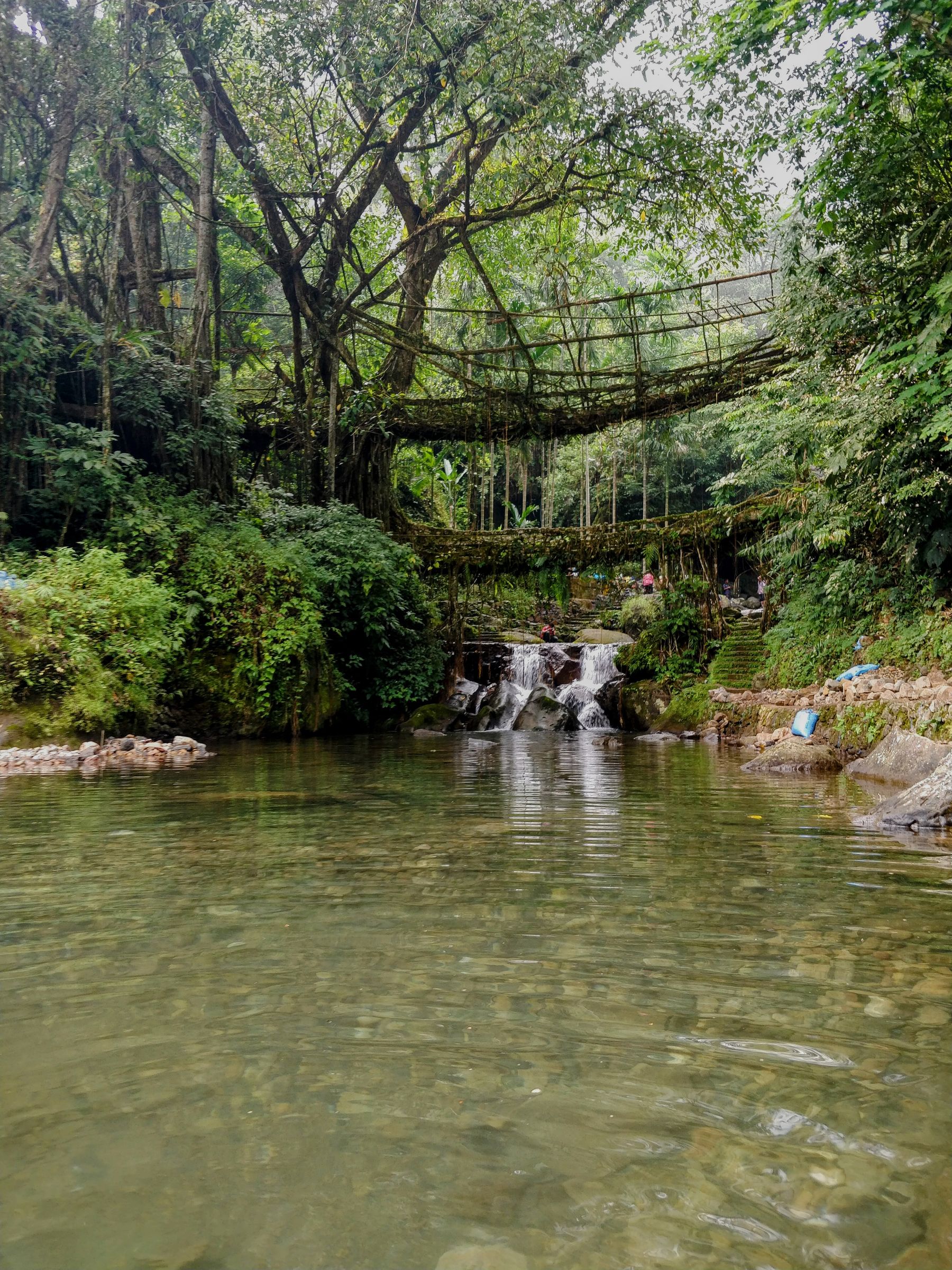
The double-decker root bridge at Nongriat is around three thousand steps down from Tyrna and the same back up. Start at six, sleep the night at the bottom, and it turns from an ordeal into the best day of the trip. Dawki's clear river is worth seeing before nine, when the boats are still tied up. If you loop east through the Jaintia hills, Nartiang repays the detour: a field of standing monoliths beside a Durga temple some five centuries old, counted among the 51 Shakti Peethas — Hinduism's most sacred goddess sites, one of them quietly in Meghalaya. And eat jadoh at a Khasi hotel rather than at your own.
Being a good guest
Root bridges are grown, not built, and take decades to become walkable — cross a few people at a time and pay the village entry fees without haggling. Carry plastic back out of the gorges; the villages have no way to deal with it. And ask before photographing inside homes, especially in the villages that became famous for being photogenic.
Where this path continues
When the hills have rinsed you clean, Kolkata is the natural descent — an hour's flight from Guwahati, or from Shillong's own small airport when the weather agrees. The two are old acquaintances: the Khasi hills answered to Calcutta for much of the nineteenth century, and the bookshops and long arguments remain fluent in it.