
West Bengal · East India
Kolkata
The city that would rather argue than agree
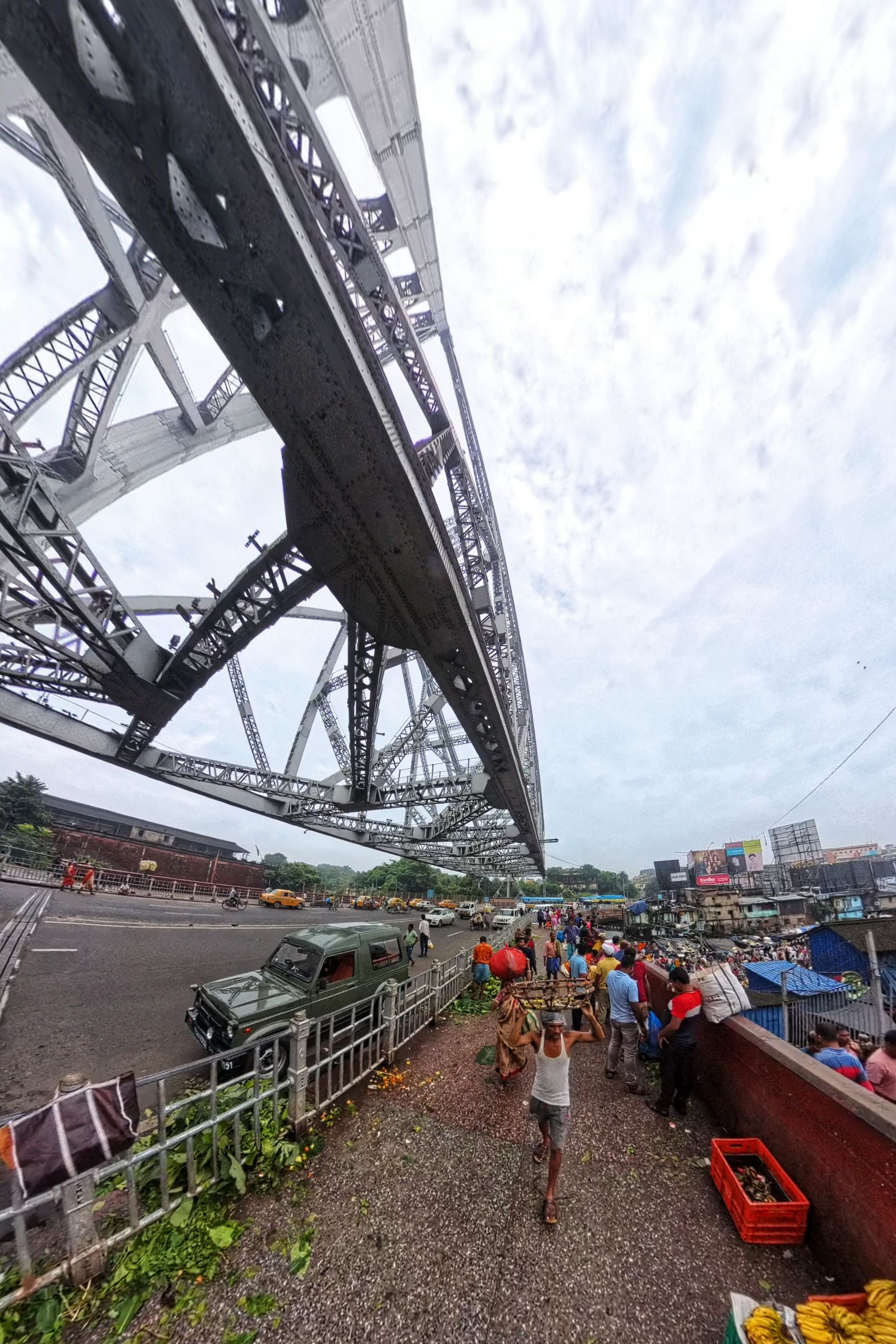
Howrah Bridge at rush hour
A capital that lost its government
Kolkata was the capital of British India until 1911, when the administration moved to Delhi and left the city with the architecture of a capital and none of the power. What it kept was the argument. The Bengal Renaissance happened here — Tagore, Vivekananda, later Satyajit Ray — a long run of people who believed that writing things down mattered. Vivekananda's part of it still has a working address: Belur Math, the riverside monastery he founded in 1897 as headquarters of the Ramakrishna Mission, with Dakshineswar — the Kali temple where his teacher Ramakrishna served as priest — directly across the Hooghly.
The result is a city measurably poorer than Mumbai or Bengaluru and completely uninterested in feeling smaller than them. It is also humid, crumbling and slow. Most people who end up loving India love Kolkata; very few arrive already loving it.
Where an afternoon of talk counts as work
Adda — long, unproductive, argumentative conversation — is treated here as a legitimate use of a day. It happens over coffee at the Indian Coffee House on College Street, surrounded by pavement bookstalls that run for the better part of a kilometre.
Durga Puja, in September or October, is the point of the year. For five days the city puts up hundreds of temporary pavilions, some of them genuinely ambitious contemporary art, and walks between them all night. UNESCO added it to its intangible heritage list in 2021. Room rates triple, trains fill months ahead, and it is still worth building a trip around.
The honest logistics
- Best monthsNovember to February — dry and cool. Durga Puja lands in September or October and changes everything.
- Getting thereNetaji Subhas Chandra Bose International (CCU). Howrah and Sealdah are the two big rail terminals — check which one your train actually uses.
- StayingPark Street and Ballygunge for restaurants and quiet; north Kolkata for old houses and early mornings.
- Days neededThree. The city rewards going back to the same street twice more than it rewards a checklist.
- Budget feelFrom ₹2,000/day; around ₹5,500/day buys real comfort and much better eating.
What a Saint will tell you
Start at Kumartuli at seven in the morning, the riverside lane where the Durga idols are built up from clay and straw — it works all year, not only at festival time. Kalighat, south of the centre, is the older goddess — a Kali shrine counted among the 51 Shakti Peethas and the likeliest source of the city's name; go early, accept the crush, and politely decline anyone offering to speed up your darshan. Ride a tram if a route is still running; Kolkata has the last tram network in India and it shrinks every year. Eat phuchka from a cart, a kathi roll on Park Street, and a Bengali fish thali at lunch rather than dinner. Mishti doi afterwards, always.
Being a good guest
Hand-pulled rickshaws still work in north Kolkata and the men pulling them depend on the income; if you use one, pay well above the asking price and do not photograph the puller as though he were scenery. During Puja, follow the crowd routes the volunteers set — the pavilions are dangerously full and the marshals are not being officious.
Where this path continues
Bengal continues uphill. A night train to New Jalpaiguri and a morning's climb puts you in Darjeeling, where the same state trades humidity for tea gardens and, on a clear morning, Kangchenjunga.