
Uttarakhand · North India
Rishikesh
Where the river is still young
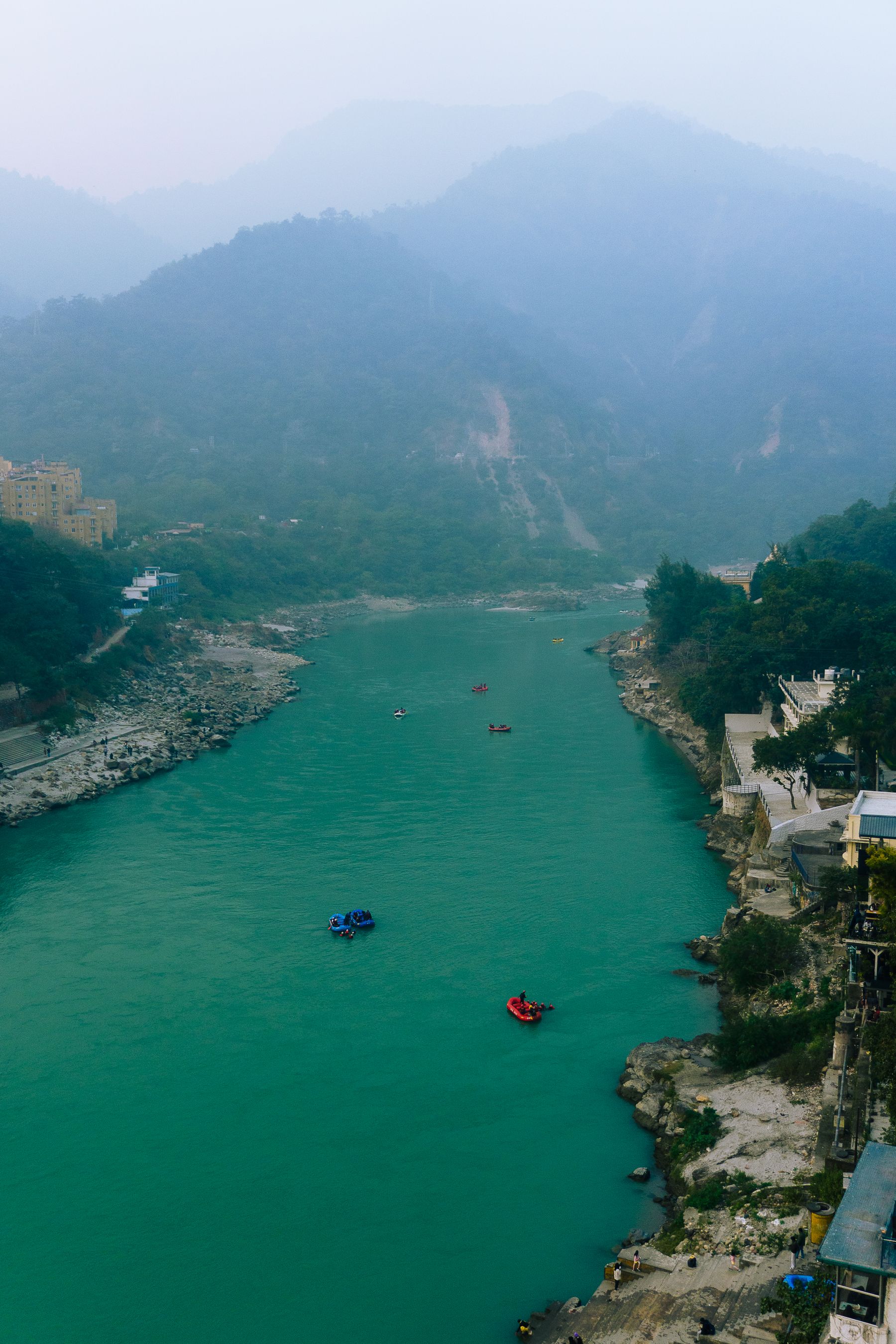
The Ganges above Rishikesh
Where the Ganges leaves the mountains
Rishikesh sits on a hinge. Upstream the Ganges is cold, fast and green; a few kilometres south it spreads into the plain and becomes the wide brown river the rest of India knows. People have come here to think about that transition for a very long time, well before anyone printed the phrase yoga capital of the world.
The Beatles arrived in 1968 and the label stuck, for better and worse. What survives underneath the branding is older and quieter — sadhus who have walked this stretch for decades, ashrams that ask nothing of you, and a river loud enough to drown out your own arguments.
Two towns sharing one river
Evenings belong to the aarti — lamps set on the water at Triveni Ghat and at Parmarth Niketan while a few hundred people sing something they have known since childhood. The town is legally vegetarian and dry within its limits: no meat, no alcohol. It changes the temperature of the nights more than you would expect.
The other Rishikesh is white water. The rafting season runs roughly September to June, and the beaches upstream toward Shivpuri fill with twenty-somethings out of Delhi. The two versions share the river without much friction — a class at seven in the morning, a grade-three rapid by eleven.
The honest logistics
- Best monthsFebruary to April and September to November. May–June is hot; July–August brings monsoon landslides.
- Getting thereFly to Dehradun (DED), about 20 km away, or train to Haridwar and drive 45 minutes. Delhi is roughly six hours by road.
- StayingTapovan for cafés and yoga schools, Swarg Ashram for quiet, riverside retreats upstream toward Shivpuri.
- Days neededThree days for the town and one river run; considerably longer if you have come for a course.
- Budget feelComfortable from ₹2,000/day; riverside retreats from ₹6,000/day.
What a Saint will tell you
Take the aarti at Triveni Ghat over the famous one — smaller, more local, less staged. The Beatles Ashram is a ticketed ruin inside a reserve now, so go at opening before the painted walls fill with people photographing themselves. Walk upriver early and the beaches are yours. And judge a yoga school by who teaches there, not by its feed.
Being a good guest
The Ganges is still clean enough to swim in here, which is worth defending. Carry your plastic back off the beaches, keep soap out of the water, and remember that the ashrams are homes to the people living in them — ask before photographing anyone in robes.
Where this path continues
Rishikesh suits people who came for the mountains and stayed for the quiet. Dharamshala and McLeod Ganj offer that same combination further north — Tibetan Buddhism in place of the Ganges, cedar forest in place of rapids.