
Himachal Pradesh · North India
Dharamshala–McLeod Ganj
A capital in exile, under the Dhauladhar
Above McLeod Ganj
A hill station that became someone's country
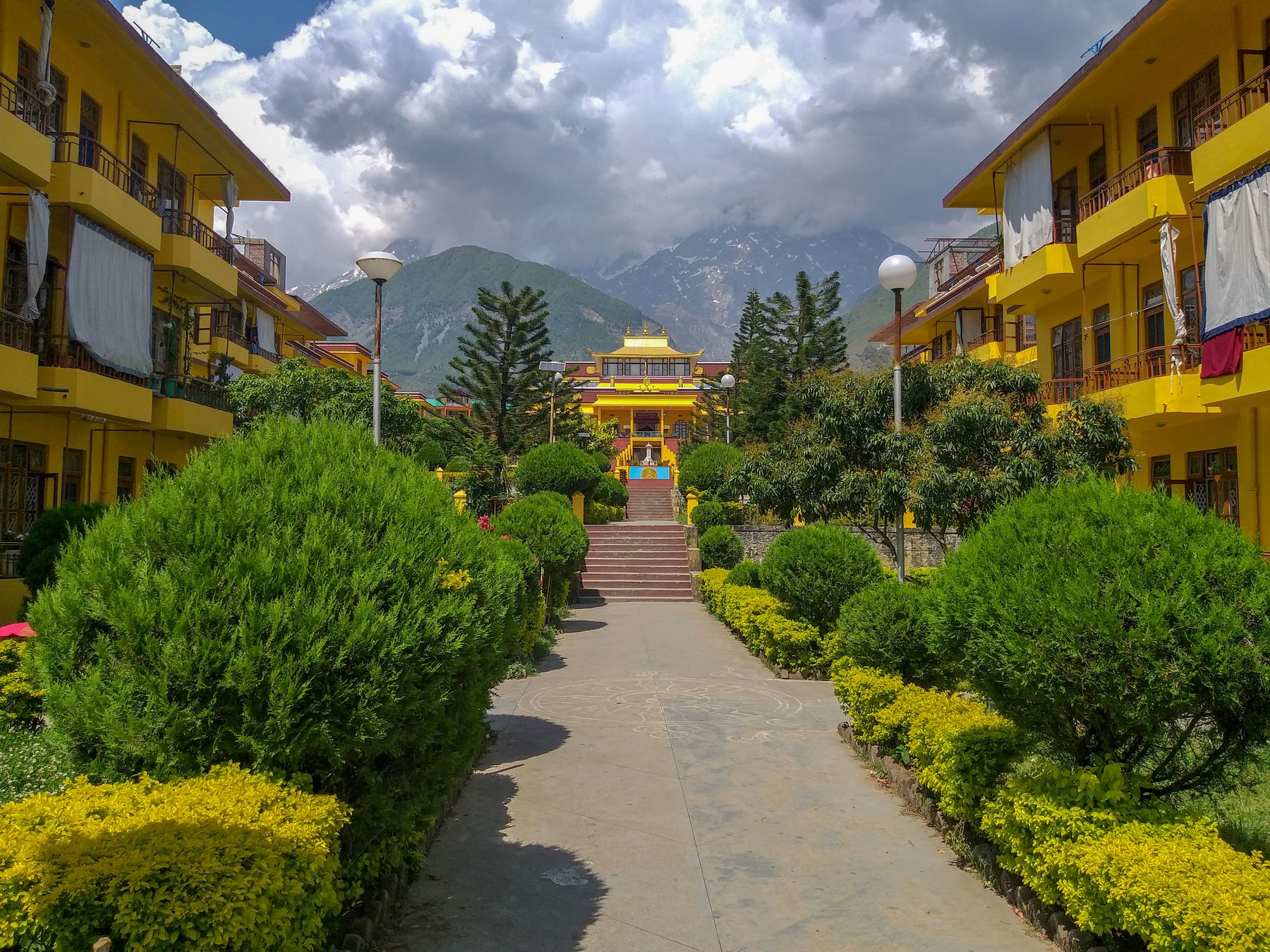
McLeod Ganj is a British hill station that ended up as the address of a government in exile. After the Dalai Lama crossed into India in 1959, Nehru offered him this half-abandoned ridge above Dharamshala, and Tibetans rebuilt a capital on it — monastery, library, parliament, printing press.
The result is strange and quietly moving: the Kangra valley spread out below, the grey wall of the Dhauladhar directly above, and in between a town where the signs are in three scripts and half the conversations concern a country nobody under sixty has seen.
Mornings go clockwise
The day starts with the kora, the walking circuit around the Tsuglagkhang complex — elderly Tibetans with prayer wheels, a few visitors trying to keep pace and remembering to go clockwise. Namgyal Monastery holds public teachings several times a year, and the dates are published months ahead.
The food follows the migration: thukpa, tingmo, laphing and butter tea, with Kangri Himachali cooking down in Dharamshala itself. At the Norbulingka Institute, thangka painters and metalworkers train for years in crafts that came close to disappearing.
The valley floor below has its own, far older sacred map. Brajeshwari Devi in Kangra town and the flame temple at Jwalamukhi — where the deity is a cluster of natural flames burning straight out of the rock — are both counted among the Shakti Peethas, and both make comfortable day trips from the ridge.
The honest logistics
- Best monthsMarch to June and September to November. July and August are seriously wet — this is one of the rainiest corners of Himachal.
- Getting thereFly to Gaggal (DHM), 15 km away, or take the overnight bus from Delhi — around eleven hours. By rail, Pathankot, then road.
- StayingMcLeod Ganj for the temple and cafés; Dharamkot or Naddi for quiet and views; lower Dharamshala for cheaper rooms.
- Days neededThree; four if you walk up to Triund and sleep there.
- Budget feelFrom about ₹1,500/day — this is inexpensive India; ₹5,000/day buys a very good room.
What a Saint will tell you
Walk the kora clockwise and keep the prayer wheels on your right. Triund is a four-hour climb rather than a stroll, and the top is cold whatever the valley felt like at noon. For quiet, Dharamkot and Bhagsu are twenty minutes uphill from the crowds. Bhagsu is also older than anything else up here: its Bhagsunag temple, a Shiva shrine with a spring-fed sacred pool that Gorkha soldiers' families have tended since the 1800s, sits right where the waterfall path begins. And the volunteer conversation classes with monks are easy to join — most travellers say it was their best afternoon here.
Being a good guest
Much of this town is a refugee community, not a backdrop. Ask before photographing monks or ceremonies, and buy from Tibetan-run co-operatives so the money stays inside it. Litter travels downhill fast here — carry yours out, especially on the Triund trail.
Where this path continues
If the Buddhist Himalaya is what pulled at you, Spiti is the step up — higher, drier, harder to reach, with a thousand-year-old monastery at Tabo waiting at the end of the road.