
Rajasthan · North India
Pushkar
A lake town that runs on faith
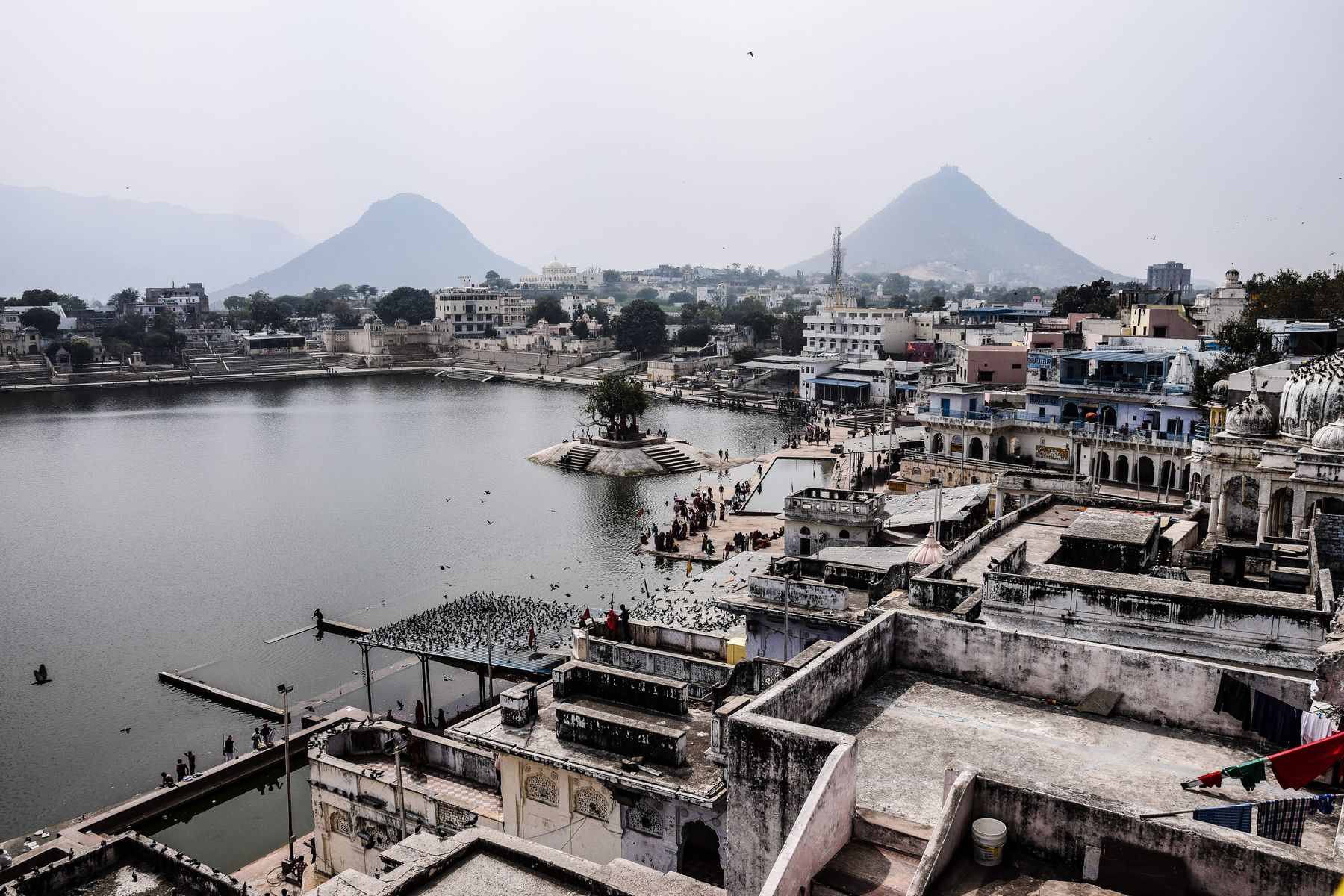
Pushkar lake at dusk
A lake made by a dropped lotus
The story is that Brahma let a lotus fall and water appeared where the petals landed. Around that water grew fifty-two ghats and several hundred temples, among them one of the very few anywhere dedicated to Brahma himself. The lake is man-made in fact and sacred in practice; it has been drained, dredged and refilled more than once in living memory.
Pushkar is small — one bazaar street curving around the water, cows included. It is also strictly observant: no meat, no eggs, no alcohol inside the town. Travellers have been stopping here since the 1970s, and the town has absorbed them without altering its own rules.
Kartik Purnima and the other 355 days
For about a week each autumn, on the full moon of Kartik, the dunes west of town fill with camels, horses, traders and pilgrims for the Pushkar fair. It is a genuine livestock market that has grown a tourist half; both halves are real, and the bathing on the last morning is the part that matters most to Rajasthan.
The rest of the year Pushkar is quieter than its reputation — rooftop cafés, sadhus at the ghats, bakeries that have been making the same brown bread for thirty years, and an aarti every evening as the light comes off the Aravalli hills.
The honest logistics
- Best monthsOctober to March. The fair falls on Kartik Purnima — usually November — and rates triple for that week.
- Getting thereAjmer is the railhead, 15 km over the hill; Jaipur (JAI) is the airport, about three hours by road.
- StayingLakeside havelis for the view, the outskirts for quiet. Tented camps only really make sense in fair week.
- Days neededTwo nights outside the fair; three or four during it.
- Budget feelComfortable from ₹1,500/day; heritage haveli from ₹5,000/day.
What a Saint will tell you
Climb to Savitri temple before sunrise — an hour of steps, or the ropeway if you'd rather — and you will see exactly why the town sits where it does. At the ghats someone will hand you a flower and tie a 'Pushkar passport' thread; the puja is real but the donation is negotiable, so fix your number before you sit down. Ajmer Sharif dargah is half an hour away and a completely different India.
Being a good guest
Shoes and leather come off well before the ghats, and nobody bathing wants to be photographed. Do not carry meat or alcohol into town — it isn't a suggestion here. At fair time the camels are working animals in transit; if a handler clearly isn't caring for his animal, don't hire it.
Where this path continues
Pushkar tends to send people further into the desert — Jaisalmer, where the fort is still lived in and the dunes begin at the edge of town. Udaipur is the softer alternative if it was the water you liked.