
Assam · Northeast India
Kaziranga
Grassland, rhino, and a river that redraws it every year
Kaziranga National Park, Assam
A park that began with an animal nobody could find
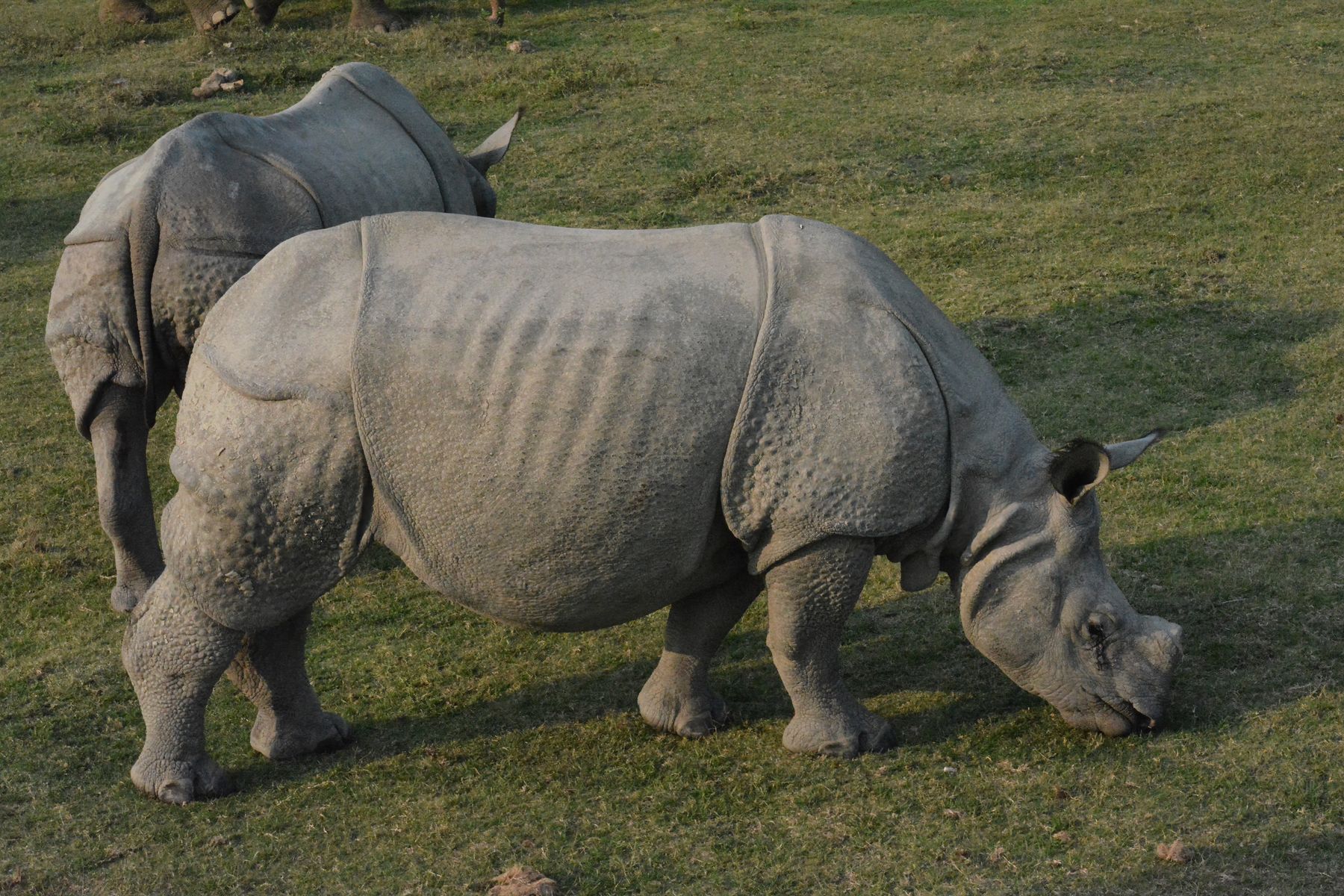
In 1904 the Viceroy's wife came here to see a rhinoceros and did not see one. She pushed her husband to protect what was left of them. There were perhaps a few dozen animals then; there are now more than two thousand, roughly two-thirds of every greater one-horned rhino alive.
It is not a finished story. Poaching pressure comes and goes, the Brahmaputra floods the park every monsoon, and the animals cross a national highway to reach higher ground when it does. Kaziranga is a conservation success that has to be won again each year.
This is Assam, and it feels nothing like the plains
The difference registers within an hour of landing: bamboo instead of brick, rice beer, Karbi and Mising villages built on stilts against the water, and tea in every direction. The estates around the park are working plantations, some more than a century old, and a few of their bungalows take guests.
Bihu, the spring festival, turns the whole state into drums and dancing in mid-April. Eat with your hands — khar, fish tenga sharp with tomato and lemon, duck with ash gourd, a great deal of sticky rice. Ask about the gamosa, the red-and-white cloth you will be handed at every welcome.
Majuli, the river island many visitors add on, is the heartland of Assam's neo-Vaishnavite satras — monasteries in the tradition of the fifteenth-century saint-reformer Srimanta Sankardeva, where monks still keep up mask-making, manuscript painting and the Sattriya dance the island gave to India. They are the reason the ferry is worth catching.
The honest logistics
- Best monthsNovember to April. The park shuts for the monsoon, usually from mid-May; February and March give the clearest sightings once the grass is burnt back.
- Getting thereFly to Jorhat (JRH), roughly two hours away, or Guwahati (GAU), roughly five. Furkating is the nearest useful railhead.
- StayingKohora, the central range gate, has most of the lodges; tea-estate bungalows sit further out and are worth the drive.
- Days neededTwo nights minimum — that is three safaris across two ranges. Four if you want Majuli island as well.
- Budget feelComfortable from ₹4,000/day including safaris; lodge comfort from ₹9,000/day.
What a Saint will tell you
Book the western range at Bagori for rhino at close range and the eastern range at Agaratoli for birds and emptier tracks — most visitors only ever do central. Morning jeeps beat afternoon ones by a distance. And take the elephant-back safari question seriously: a growing number of Saints now recommend jeeps only, and will explain their reasoning rather than argue it.
Being a good guest
Never ask your driver to chase or cut off an animal; the good ones refuse anyway. No drones, no call playback, no stepping out of the vehicle. Drive the highway stretch slowly after dark — it crosses the corridors animals use when the water rises. Choose lodges that hire locally.
Where this path continues
After the grasslands most travellers go up. Shillong and Cherrapunji are six hours away, where the Khasi hills catch the same rain that floods Kaziranga and turn it into waterfalls and living root bridges.