
Punjab · North India
Amritsar
A kitchen that never closes
Harmandir Sahib after dark
Two things the city refuses to separate
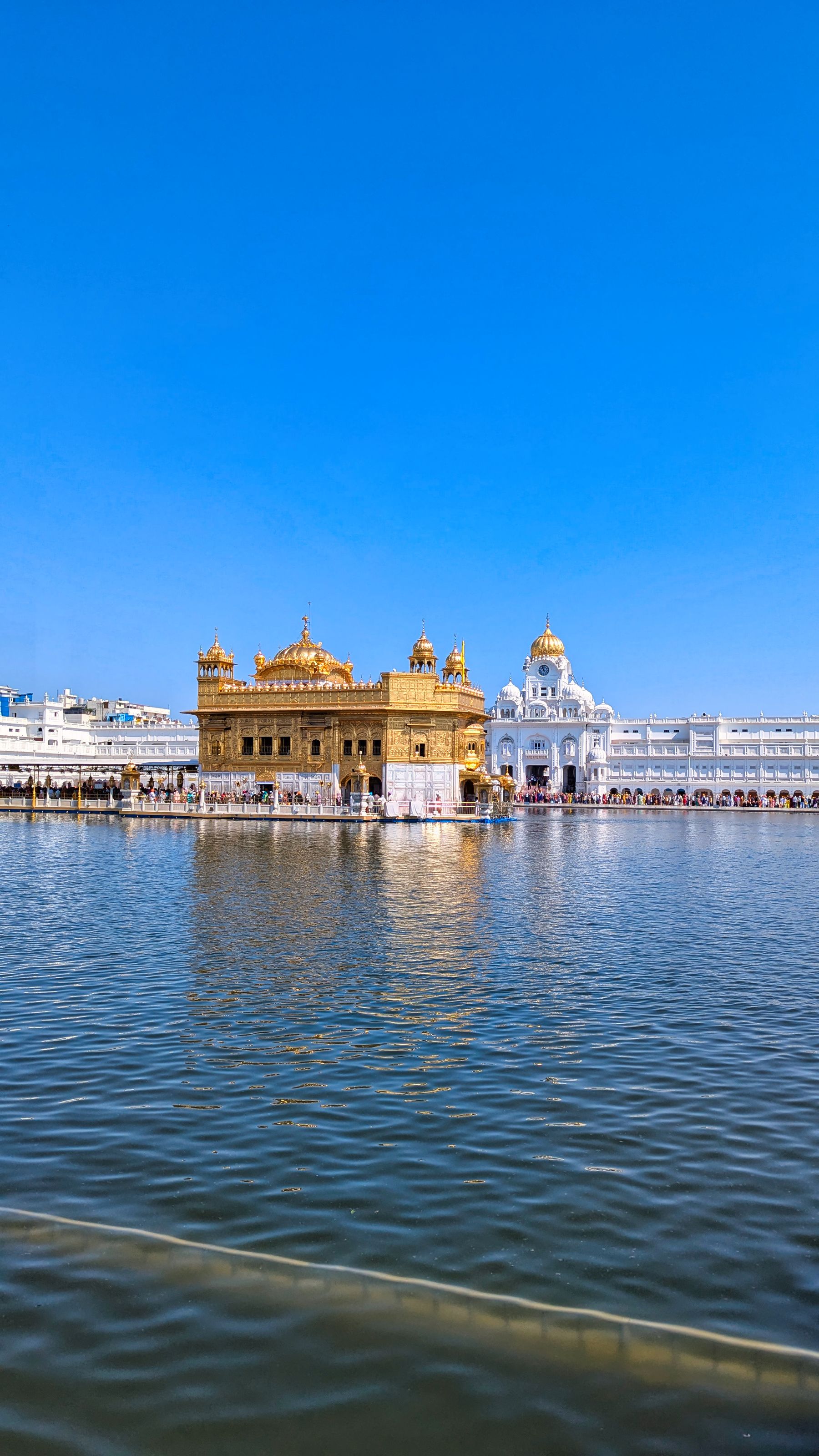
The city is named after the pool: amrit sar, the tank of nectar, dug by Guru Ram Das in the 1570s. The temple at its centre sits lower than the ground around it, so you walk down to reach it, and it has doors on all four sides so that no direction is preferred. Both are arguments, made in architecture.
Centuries later, a British brigadier ordered troops to fire on a penned-in crowd at Jallianwala Bagh on 13 April 1919. The garden is a five-minute walk from the temple. Amritsar holds both of these at once and will not let you visit only the beautiful one.
Fed first, questions never
The langar is the point. In the community kitchen beside the temple, tens of thousands of people are fed free every day, sitting in rows on the floor, served by volunteers who signed up that morning. You can join them — peeling garlic, stacking steel plates, whatever the queue needs. Nobody asks your religion.
Outside, Punjab eats accordingly: Amritsari kulcha pulled from a tandoor and crushed under butter, fish fried in ajwain batter, lassi in a glass you will not finish. The city is loud, generous and slightly overwhelming, in roughly that order.
The honest logistics
- Best monthsOctober to March. June can touch 45°C; December mornings are foggy and cold enough for a real coat.
- Getting thereFly into Amritsar (ATQ), or take the train from Delhi — around six hours. The centre is compact enough to walk.
- StayingNear the temple, so the 4am walk is possible. The complex's own sarais offer simple rooms at nominal cost.
- Days neededTwo. One covers the temple and Jallianwala Bagh; the second buys the Partition Museum and Wagah.
- Budget feelComfortable from ₹2,000/day; good hotels near the temple from ₹5,000/day.
What a Saint will tell you
Go at four in the morning, when the Guru Granth Sahib is carried in on its palanquin and the marble is cold and nearly empty. Then go again at night, when the whole building is lit and doubled in the water. The Wagah border ceremony is high-volume nationalism performed daily — go knowing that, or give the afternoon to the Partition Museum instead. It is the more honest of the two.
The tank-and-sanctum idea has a Hindu sibling a fifteen-minute walk away: the Durgiana Temple, rebuilt in the 1920s on the Golden Temple's plan — gilded, reflected in its own sacred pool, and carrying a fraction of the footfall. Eleven kilometres out, Ram Tirath marks where tradition places Valmiki's ashram, which sheltered Sita and saw the birth of Lava and Kusha; its November fair is one of Punjab's oldest.
Being a good guest
Cover your head, remove your shoes and wash your feet at the entrance; head scarves are handed out free. No alcohol or tobacco anywhere in the complex, and no photography inside the sanctum. If you eat at the langar, stay and do some seva afterwards — an hour on the dish line says more than a donation.
Where this path continues
Amritsar's kind of devotion — communal, practical, fed — has an echo six hours east in Dharamshala, where a different exiled faith rebuilt itself in the hills. Delhi is the other way, and an easy train.