
Kerala · South India
Munnar
A landscape that somebody planted
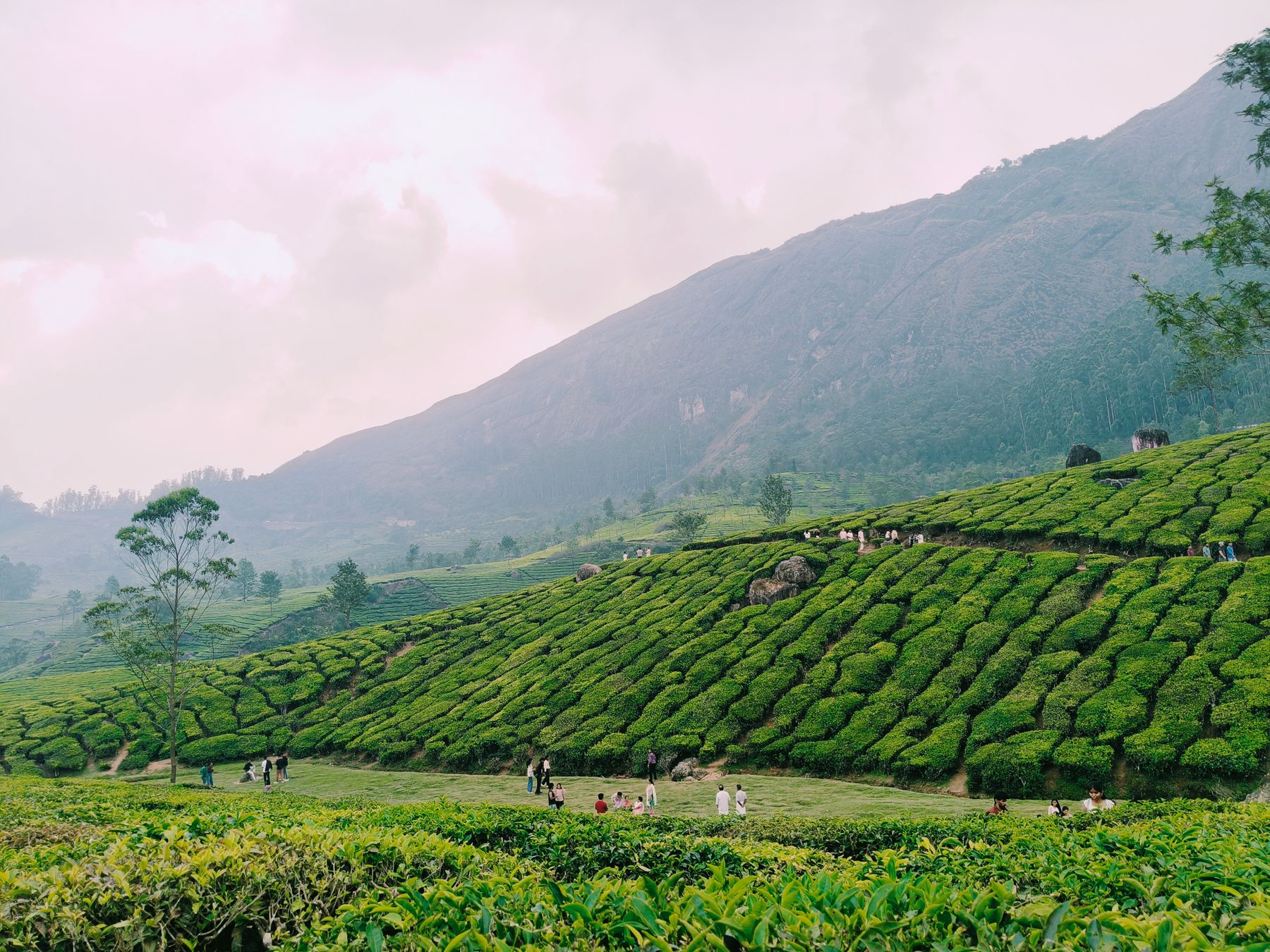
Tea estates above Munnar
The hills were leased, then replanted
Munnar's scenery is not natural and doesn't pretend to be. In 1877 a British planter, John Daniel Munro, took a lease on these hills from the Poonjar chief, and within a few decades the high ranges had been replanted ridge by ridge with tea. What you photograph as landscape is a nineteenth-century industrial plan that worked.
The people who clip it are largely Tamil families settled here generations ago, living in estate lines that are a world of their own. Look uphill past the last bush and you can still see what these hills were — shola forest surviving in the folds, grassland above it.
Estate time
The valley speaks as much Tamil as Malayalam, and estate life sets the rhythm: plucking rounds, weighing sheds, the small temples and churches at the end of each row of quarters. The tea is still processed in working factories you can walk through, watching leaf turn into the dust that ends up in your morning cup.
Above the estates is the other Munnar. Eravikulam National Park, where the Nilgiri tahr will walk right up to you, and Anamudi at 2,695 m — the highest peak in India south of the Himalaya. The neelakurinji that turns these slopes blue flowers once every twelve years; next in 2030.
The honest logistics
- Best monthsSeptember to March — clear mornings, cold nights. June to August is heavy monsoon and the hills simply disappear.
- Getting thereKochi (COK) is the nearest airport, about 110 km and four hours of hairpins; Aluva is the nearest railhead.
- StayingPlantation bungalows and estate stays for the setting. Munnar town is traffic and shops — stay 10–20 km out.
- Days neededTwo nights is enough; three if you want a proper walk rather than a tour of viewpoints.
- Budget feelComfortable from ₹2,500/day; plantation-bungalow comfort from ₹7,000/day.
What a Saint will tell you
Eravikulam shuts for roughly two months in the tahr calving season, usually February into March — check before you build a trip around it. Book the first slot of the day anywhere; by ten the mist has burned off and the buses have arrived. Skip the roadside spice shops and buy tea at the factory. The best hours here are six to eight, on an estate road with nobody on it.
Being a good guest
Elephants use the corridors between estates — drive slowly after dark and never put yourself between a herd and its calves. The workers' quarters are homes; walk past them with the manners you'd want at your own. Buy from employee-owned estates and small growers so the money stays in the valley.
Where this path continues
Munnar and the backwaters are the standard Kerala pair for a reason: four hours down from the cold to Alleppey's water and heat is a real change of climate and mood. For coast instead, Varkala's cliffs are further south.