
Tamil Nadu · South India
Madurai
A city arranged around a goddess
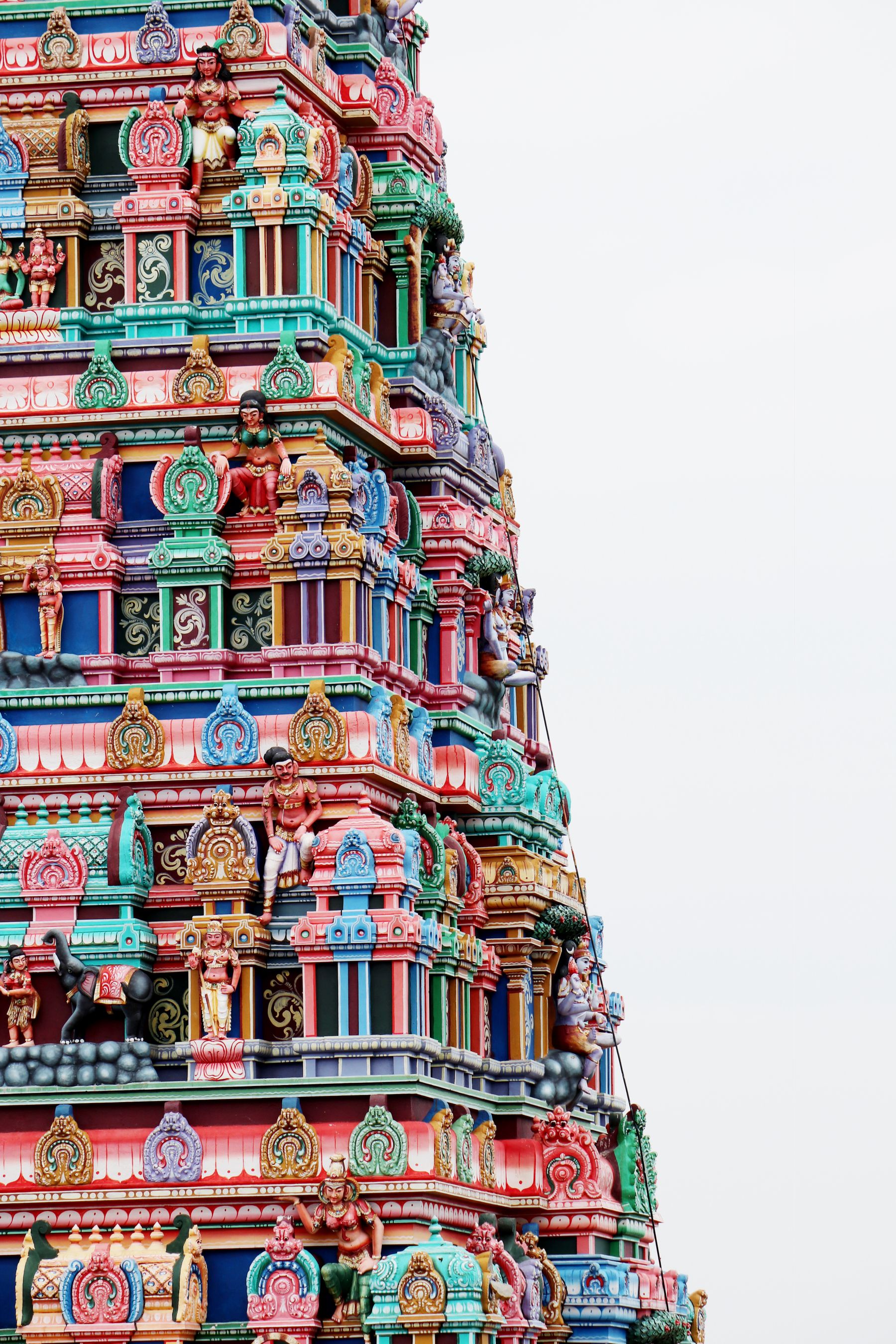
A gopuram of the Meenakshi Amman temple
The goddess who outranks her husband
Madurai has been a city for well over two thousand years — the seat of the Tamil Sangam, the academies where classical Tamil poetry was gathered and judged — and it has never once stopped being one. This is not a ruin you visit. It is a working temple town with traffic.
The Meenakshi Amman temple at its centre is unusual in that the goddess is the senior partner. Meenakshi rules Madurai; Sundareswarar, a form of Shiva, married into it. The old streets run in concentric squares around her shrine, so the city's map is essentially a diagram of the temple.
A temple that closes late and opens early
The fourteen gateway towers are covered in thousands of sculpted figures, repainted every twelve years or so, and they are startlingly bright — this is not the dignity of weathered stone, it is colour, deliberately.
Every night at around half past nine the priests carry Sundareswarar in a palanquin to Meenakshi's chamber to sleep, and carry him back before dawn. Anyone may follow. Madurai calls itself Thoonga Nagaram, the city that never sleeps, and the temple's hours make the case. Outside the walls, the flower market runs on the temple's calendar rather than the clock.
The honest logistics
- Best monthsNovember to February. The Chithirai festival in April or May is extraordinary, and also extremely hot and extremely crowded.
- Getting thereMadurai airport (IXM) from Chennai, Bengaluru and Hyderabad; overnight trains from Chennai Egmore take around eight hours.
- StayingBeside the temple for walking distance and noise; north of the Vaigai for quieter, newer hotels.
- Days neededTwo — one for the temple at both ends of the day, one for the Nayak palace, the Gandhi museum and a trip out.
- Budget feelFrom ₹1,800/day; around ₹4,500/day for reliable air-conditioned comfort.
What a Saint will tell you
Phones and cameras are not allowed inside the temple, which turns out to be the best thing about it — deposit them and simply walk. Go twice, once at six in the morning and once for the night procession; they are different buildings. Drink jigarthanda, the cold almond-and-milk thing with ice cream in it, from a shop near the temple, and take a banana-leaf meal at noon and let them refill it.
Being a good guest
Non-Hindus are not admitted to the innermost shrines. This is not negotiable and it is not personal. Leave your shoes well before the entrance, cover shoulders and knees, and step aside for the people who are here to pray rather than to look. Take a licensed guide from inside the complex rather than whoever approaches you at the gate.
Where this path continues
If it is the carving that stays with you, go north to Mahabalipuram, where Pallava sculptors cut whole temples out of the granite shore some nine centuries before Madurai's towers went up.