
Himachal Pradesh · The Indian Himalaya
Kasol
A river loud enough to think by
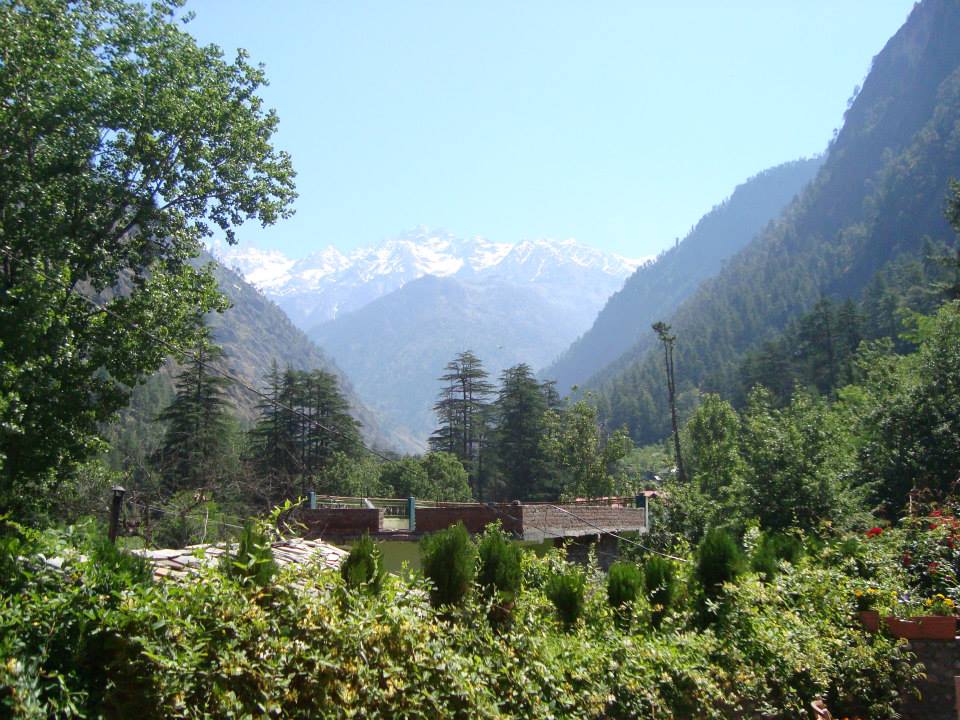
The view from Old Kasol · Photo: BenSalo, CC BY-SA 3.0
A pine flat by a fast river
Kasol is a strip of pine-shaded flat ground on the Parvati river, at about 1,600 metres, where the valley opens just enough for a village and a bridge. For most of its history it was a stop on the way to Manikaran, the pilgrim town of boiling springs a few kilometres upstream. Then, from the 1990s, backpackers — many of them young Israelis finishing military service — found it, stayed for months, and the village became something else.
The result is two valleys at once. One is guesthouses, cafés with Hebrew menus and a weekend crowd from Delhi and Chandigarh. The other, an hour's walk in any direction, is the old Parvati: wooden houses with slate roofs, apple orchards, village gods with their own temples and their own opinions.
Shakshuka, langar and village deities
Manikaran holds both of the valley's great faiths in one bend of the river. The gurdwara, linked to a visit by Guru Nanak, runs a langar whose rice and dal are cooked in pots set straight into the hot springs; beside it the Ram temple and Shiva shrines draw Hindu pilgrims who tell of jewels the serpent Shesha sent up through the water, which gave the place its name. Upvalley, villages like Tosh, Pulga and Kalga still keep their own devta, carried out in palanquins for festivals, and in October the valley's gods travel down to Kullu for Dussehra.
Food runs in two lines. The cafés serve shakshuka, sabich, hummus and Israeli breakfasts as good as anywhere in India; the homes serve siddu, steamed wheat buns stuffed with poppy seed or walnut, rajma and red rice, and trout from the cold streams. Eat both, in that order.
The honest logistics
- Best monthsMarch to June and September to November. Monsoon brings landslides on the valley road; winter is cold, quiet and partly shut.
- Getting thereKullu–Bhuntar airport (KUU) is about 30 km away, but flights are few and weather-dependent. Most travellers take an overnight bus from Delhi to Bhuntar or Kasol, eleven to fourteen hours.
- StayingKasol for convenience; Chalal, Tosh or Pulga for quiet. Simple guesthouses and homestays, with a few better cottages.
- Days neededFour lets you walk to a village or two and soak at Manikaran. Many people stay weeks.
- Budget feelComfortable from ₹1,800/day; good cottages from ₹4,500/day.
Local cuisine & must-try dishes
Festivals & celebrations
What a Saint will tell you
Kheerganga is a 12 km walk up from Barshaini to a hot-spring pool on a high meadow, and overnight camping there has been banned since 2024 — plan it as a long day, start early, and sleep in Barshaini, Kalga or Pulga. Check the road beyond Manikaran before you set out; landslides close it every season. Walk across the bridge to Chalal at dusk instead of sitting in the main street. And carry cash: ATMs in the valley are few and often empty.
Being a good guest
Cannabis grows wild here, but possessing or buying it is illegal, and the police do check. Village temples and devta grounds are often closed to outsiders — read the signs or ask, and do not touch shrines. The valley has no real way to deal with plastic; bring a bottle and filter, carry your rubbish back to Bhuntar, and keep music off on the trails.
Where this path continues
Manali is about three hours from Kasol, up the Beas from Bhuntar — bigger, busier, and the gateway to the high passes. For travellers who came to the Parvati for its old villages, Old Manali and the Solang side still have them.