
Rajasthan · North India
Jodhpur
A blue city under a wall of rock
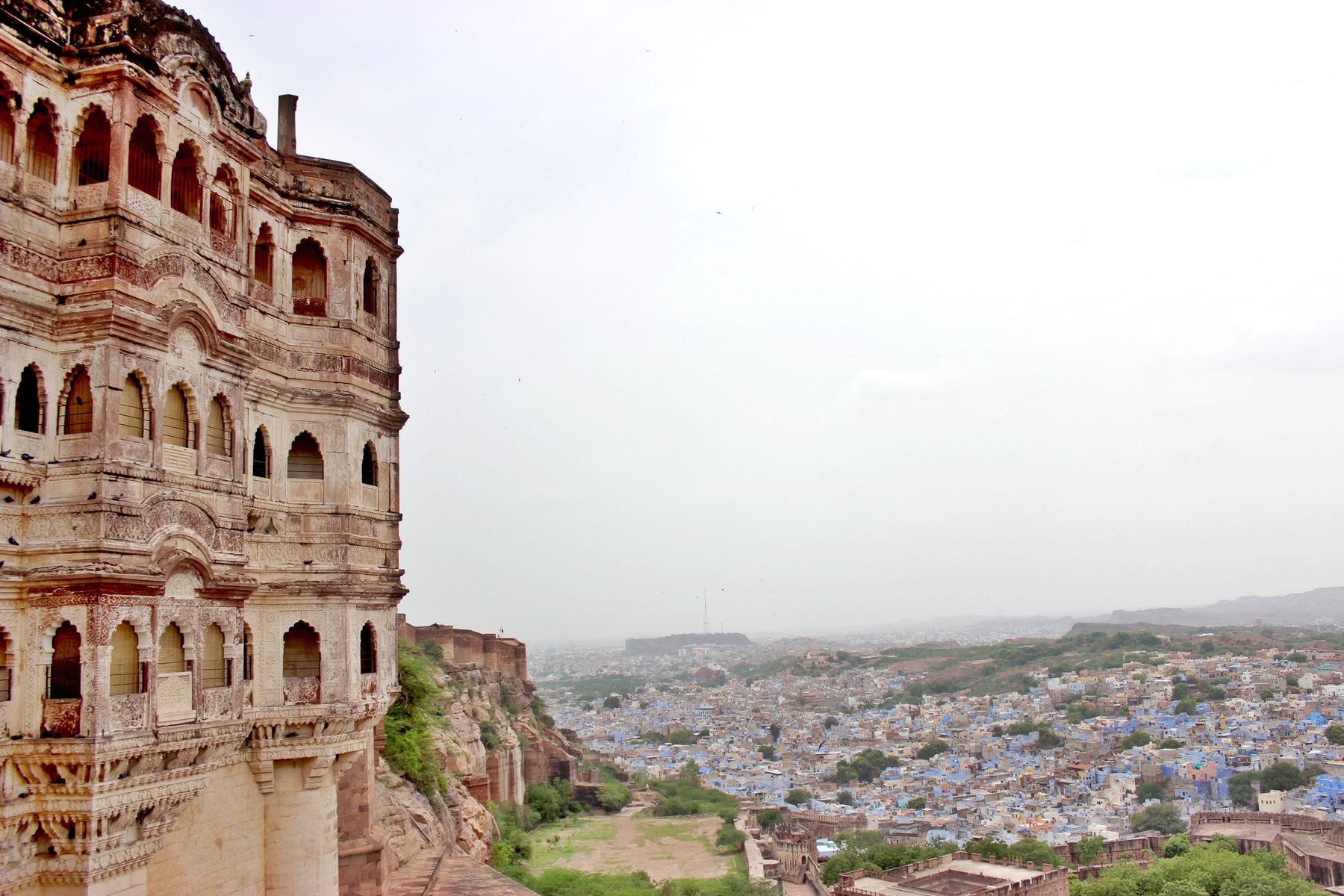
Mehrangarh above the old city
Built on the one rock for a hundred miles
Rao Jodha moved his capital here in 1459 because of the rock — a sheer sandstone outcrop rising out of flat desert, hard to besiege and, as it turned out, impossible to improve on. Guides will tell you Mehrangarh never fell, and its walls do carry cannonball scars from attacks that failed — but Aurangzeb took it in 1679, and the Rathores needed nearly thirty years to win it back.
The blue belongs to the town below. Nobody agrees why: limewash mixed with copper sulphate to keep termites out, Brahmin households marking themselves, or simply that indigo was cheap and kept rooms cool. All three explanations are offered with total confidence by different guides. The colour is thinning now, house by house, as ordinary paint gets easier to buy.
A fort that takes itself seriously, and a market that doesn't
Mehrangarh is the rare Indian fort that is also a proper museum. The trust that runs it has spent decades on conservation and it shows in everything from the palanquin gallery to the label writing; the same trust stages a folk-music festival on the ramparts each October, around the full moon. It is still a working shrine as well: at the ramparts' southern end, the Chamunda Mata temple holds the guardian goddess Rao Jodha brought from his old capital at Mandore in 1460, and during Navratri the fort fills with locals climbing for her darshan rather than the galleries.
Below, the old city is a working market rather than a heritage zone: Sardar Market under the clock tower, spice sellers, bangle lanes, and Toorji ka Jhalra, a stepwell dug out of two centuries of silt and now the place the neighbourhood swims. Mirchi vada in the afternoon, mawa kachori after, makhaniya lassi whether you asked or not.
The honest logistics
- Best monthsOctober to March. The folk festival lands in October; May and June sit around 45°C.
- Getting thereJodhpur airport (JDH) has daily flights; trains run from Delhi and Jaipur, and Jaipur is about five hours by road.
- StayingOld blue city for rooftops facing the fort; the Umaid Bhawan side and outskirts for space and quiet.
- Days neededTwo days for the fort and the market; three if you want the Bishnoi villages or Osian. Osian's draw is its 8th–11th-century sandstone temples — Sachiya Mata, still busy with pilgrims, and a rare early Sun temple among them.
- Budget feelComfortable from ₹2,200/day; heritage havelis from ₹6,500/day.
What a Saint will tell you
Give Mehrangarh a full three hours and take the audio guide — it is among the best in the country. Then walk out of the far gate into Rao Jodha Desert Rock Park, where a small team spent years pulling out invasive mesquite and putting native desert plants back. Almost nobody goes, and the fort looks best from in there. Jaswant Thada at opening time, before the coaches arrive.
Being a good guest
The Bishnoi villages outside town are a community, not an exhibit. Go with someone who has a real relationship there, pay properly, and refuse any tour that treats a family's home as a stage. In the blue lanes, remember that people live behind those doors and are not backdrop.
Where this path continues
Jodhpur's stone and market noise leads naturally to Udaipur, five hours south — the same Rajput history, built around water instead of rock, and considerably softer in the evenings.