
Telangana · The Deccan
Hyderabad
The Deccan's capital, still cooking
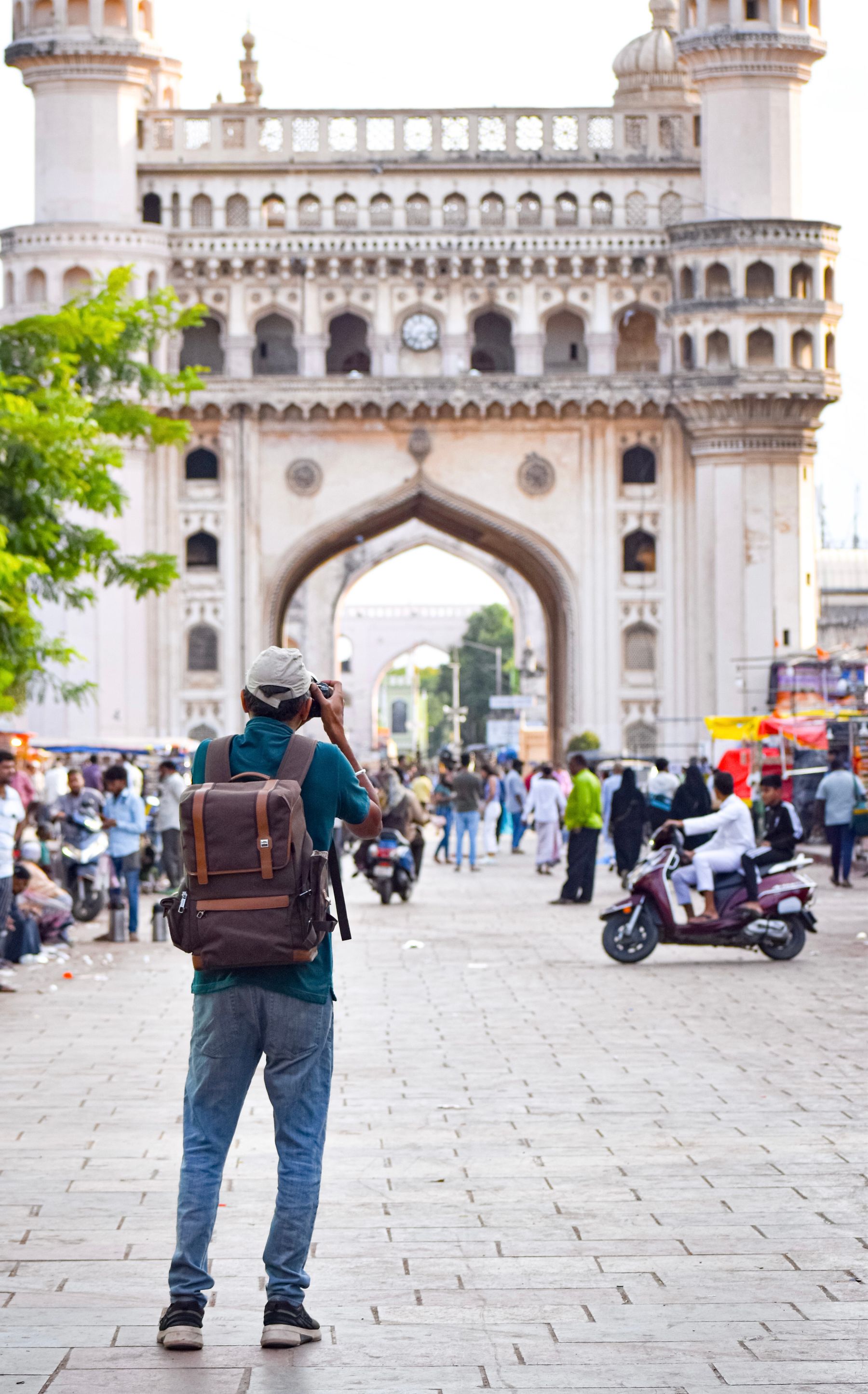
Charminar, at the centre of the old grid
A city founded because the old one ran dry
Golconda, the fort city to the west, had outgrown its water. So in 1591 Muhammad Quli Qutb Shah laid out a new capital on the Musi river with the Charminar at its crossroads. It has been a trading city ever since — diamonds first, then pearls, now software.
The Nizams who followed ruled the largest princely state in India and stayed outside the Union until 1948. That long half-independence is why Hyderabad feels less like a regional capital and more like the leftover centre of something else.
Two languages, one kitchen
The Old City around Charminar speaks Deccani Urdu, the newer city speaks Telugu, and plenty of people run both plus English inside a single sentence. It is the least self-conscious mixture in India, and it shows up in the food more clearly than anywhere else.
Biryani here is dum — raw marinated meat and rice sealed in one pot and cooked together, which is why the good places sell out by mid-afternoon. Around it: haleem in Ramzan, Irani chai and Osmania biscuits in cafés that have not changed their furniture since the sixties, and glass bangles in Laad Bazaar made by families who have made nothing else.
Bonalu, Telangana's own state festival, opens in the monsoon month of Ashada with women carrying decorated pots of offerings for Mahakali up to the Jagadamba temple inside Golconda's walls — the fort the city outgrew still gets the first procession.
The honest logistics
- Best monthsOctober to February. April to June sits around 40°C and the Old City has no shade to spare.
- Getting thereRajiv Gandhi International (HYD) at Shamshabad, well connected in India and abroad; Secunderabad Junction for trains. The metro is genuinely useful.
- StayingBanjara Hills and Jubilee Hills for hotels and restaurants; near the Old City if you want to be at Charminar at dawn.
- Days neededThree days. Two covers Golconda and the Old City; the third buys you Salar Jung and Chowmahalla unhurried.
- Budget feelComfortable from ₹2,500/day; heritage hotels with a car from ₹7,000/day.
What a Saint will tell you
Eat biryani at lunch, not dinner — the pot is finished by mid-afternoon and what comes after it has been reheated. Give the Qutb Shahi tombs a morning rather than only Golconda: same dynasty, half the crowd, better stonework. The cafés by the Charminar pour chai from dawn. And walk Laad Bazaar on a weekday, or you will move with the crowd instead of through it. If the software city has a shrine, it is Chilkur Balaji on Osman Sagar — Visa Balaji to everyone — where engineers circle the sanctum 11 times to ask and 108 in thanks once the posting comes through, and the temple, famously, keeps no offering box at all.
Being a good guest
The Old City is a residential neighbourhood, not an open-air exhibit. Dress modestly near Mecca Masjid, ask before photographing people in the lanes, and don't grind a bangle-maker down over ₹50 — that margin is theirs, not a middleman's.
Where this path continues
Ahmedabad is the natural pairing: another walled old city with Islamic architecture, a food culture worth planning your day around, and the same habit of living inside its own monuments.