
Bihar · East India
Bodh Gaya
Where the Buddha stopped looking
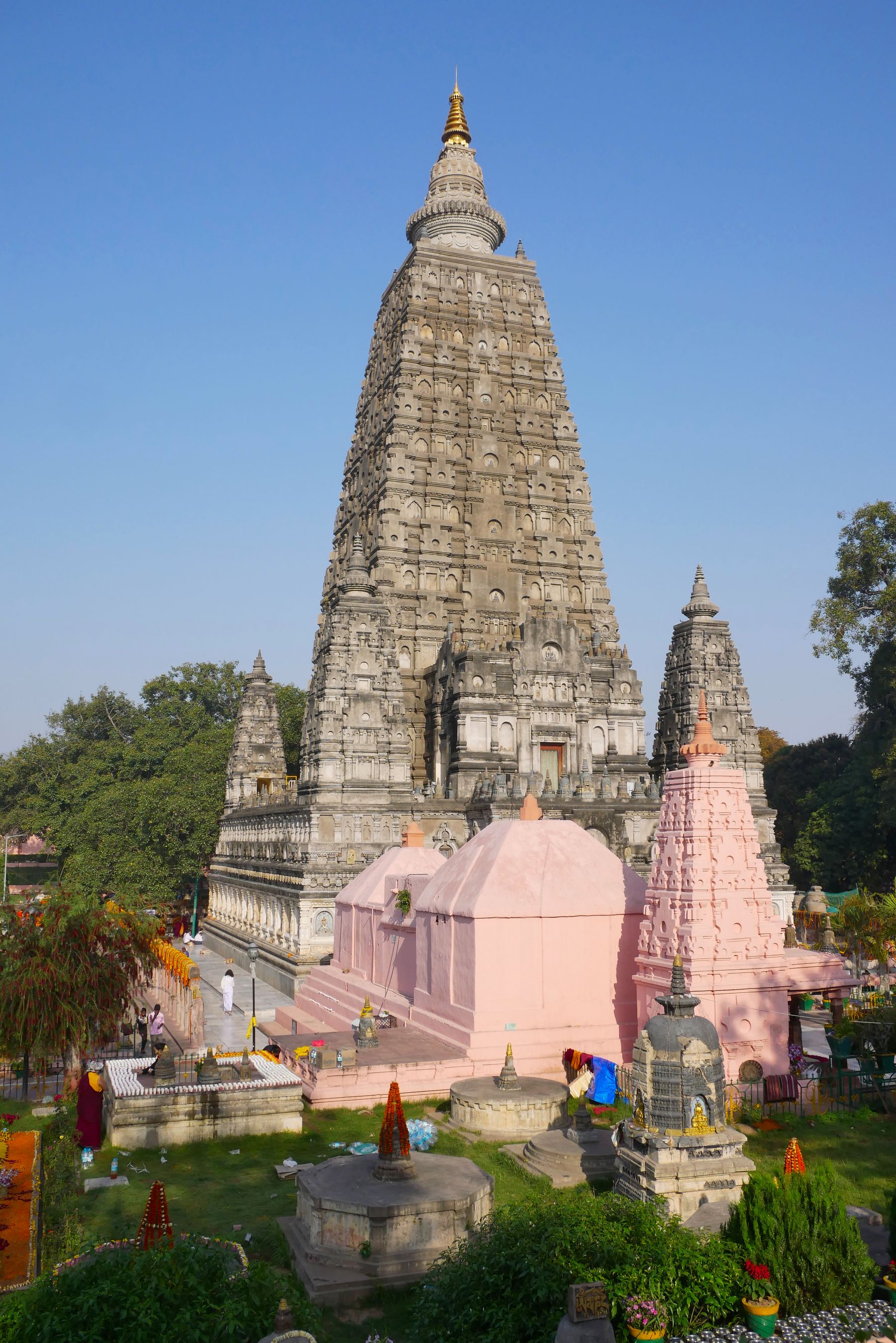
Mahabodhi Temple, early morning
One night under a fig tree
A prince sat down here, decided not to get up until he understood something, and by morning he had. Every monastery in this small dusty town, every pilgrim doing full-length prostrations on a wooden board, grew out of that one night roughly two and a half thousand years ago.
The Mahabodhi Temple still marks the spot. Ashoka raised the first shrine, the brick tower standing now is older than most things called ancient, and the Bodhi tree in the courtyard descends from a cutting carried to Sri Lanka and brought back. Nineteenth-century archaeologists restored the temple heavily, but nothing about the place was invented for visitors.
The whole Buddhist world keeps an address here
Thailand, Bhutan, Japan, Myanmar, Tibet, Vietnam and a dozen others have built monasteries along one road, each in its own architecture, each running its own kitchen and its own timetable. You can walk through six countries in an afternoon, and the bells never quite line up.
Winter is when the town fills. Tibetan pilgrims arrive by the busload, chanting starts before dawn and barely stops, and the big monastic teachings can triple the population for a week. Come in summer and the same streets are almost empty, and very hot.
The honest logistics
- Best monthsNovember to February. December and January are busiest and coldest at dawn; avoid April to June.
- Getting thereGaya airport (GAY) is 12 km away with seasonal regional flights; Gaya Junction has trains from Delhi, Kolkata and Varanasi. Patna is 110 km by road.
- StayingMonastery guesthouses are clean, cheap and rule-bound; a handful of comfortable hotels sit near the temple gate.
- Days neededTwo days sees the town properly. A meditation course will ask for ten.
- Budget feelSimple from ₹1,200/day; comfortable from ₹4,000/day.
What a Saint will tell you
Go in at 5.30 am, when the courtyard still belongs to people who are actually praying — by nine it belongs to tour groups. Cameras and phones need a separate paid ticket at the gate, so decide before you join the queue. Cross the river to the Sujata Stupa, where he gave up starving himself. And Bihar is a dry state; the ban is enforced.
Gaya, the town your train or flight lands in, is a pilgrimage in its own right — Hinduism's chief place for pind-daan, the rites owed to ancestors, with the Vishnupad Temple on the Falgu river built over what tradition holds is Vishnu's own footprint. During the Pitru Paksha fortnight each autumn, lakhs arrive to feed their dead; the rest of the year, an hour there repays the detour.
Being a good guest
This is a shrine before it is a sight. Cover shoulders and knees, leave shoes at the gate, walk clockwise, and never step over or photograph someone mid-prostration. Give to a monastery kitchen or a local school rather than to the children working the temple approach — cash there only keeps them out of class.
Where this path continues
Varanasi is a few hours north and the natural sequel — the same river valley and the same age of faith, played at ten times the volume.